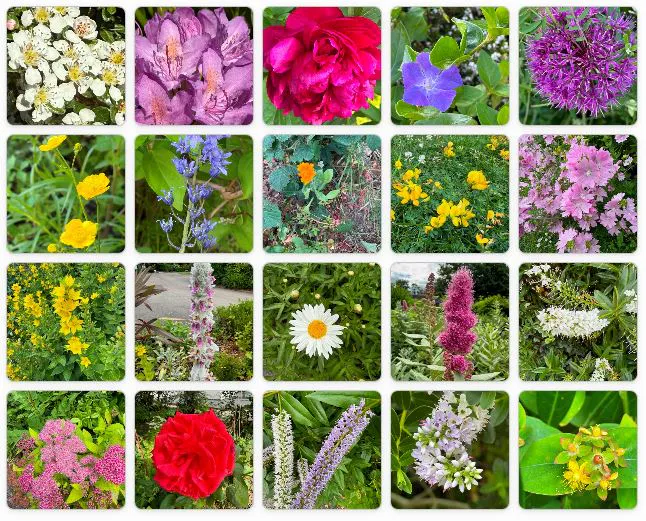
Periwinkle (Vinca) — native to Europe, is an evergreen, spreading perennial groundcover that carpets the ground with violet-blue pinwheel flowers. Its main flush is in spring, but it often surprises us with sporadic blooms through summer and autumn too. It's a useful early nectar source for bees.
Lamb's ears (Stachys byzantina) — native to Turkey, Armenia, and Iran, is a herbaceous perennial with semi-evergreen, silvery foliage. It sends up woolly grey flower spikes dotted with small pink-purple blooms from June to August. It has a lovely wildlife quirk: wool carder bees famously strip the fuzzy hairs from the leaves to line their nests.
A Garden That Keeps Giving
Every plant in our gardens and grounds at Leigh House is a perennial that returns year after year, or a self-seeding annual — nothing here is a one and done bloom, which means the display keeps building in richness as the plants mature. What we love most is the succession of interest: spring bulbs and blossom give way to a long parade of summer perennials and shrubs, many of which — like the roses, mallow, and tutsan — will keep flowering for months if we look after them well.
Our top picks for wildlife
If you're planning a pollinator-friendly patch of your own, here's where to start:
● Bird's-foot trefoil — caterpillar food plant for the common blue butterfly, plus a great bee plant
● Bluebells — vital early spring nectar for waking bees
● Allium — a strong pollinator draw when in flower
● Veronicastrum — bee and butterfly magnet, especially valuable late in the season
● Lamb's ears — nesting material for wool carder bees
● Hebe — reliable late-season nectar when other flowers are fading
A gentle note: double flowered varieties — our peonies, double buttercups, and hybrid tea rose — are less useful to pollinators than their single-flowered cousins, since the extra petals often crowd out or replace the pollen and nectar bearing parts of the flower. It's a good reminder that the showiest blooms aren't always the most generous to wildlife!
We hope you've enjoyed this little tour of what's currently in bloom at Leigh House Pudsey, Leeds, and a bit about where it all comes from. Do come and see it all in person!