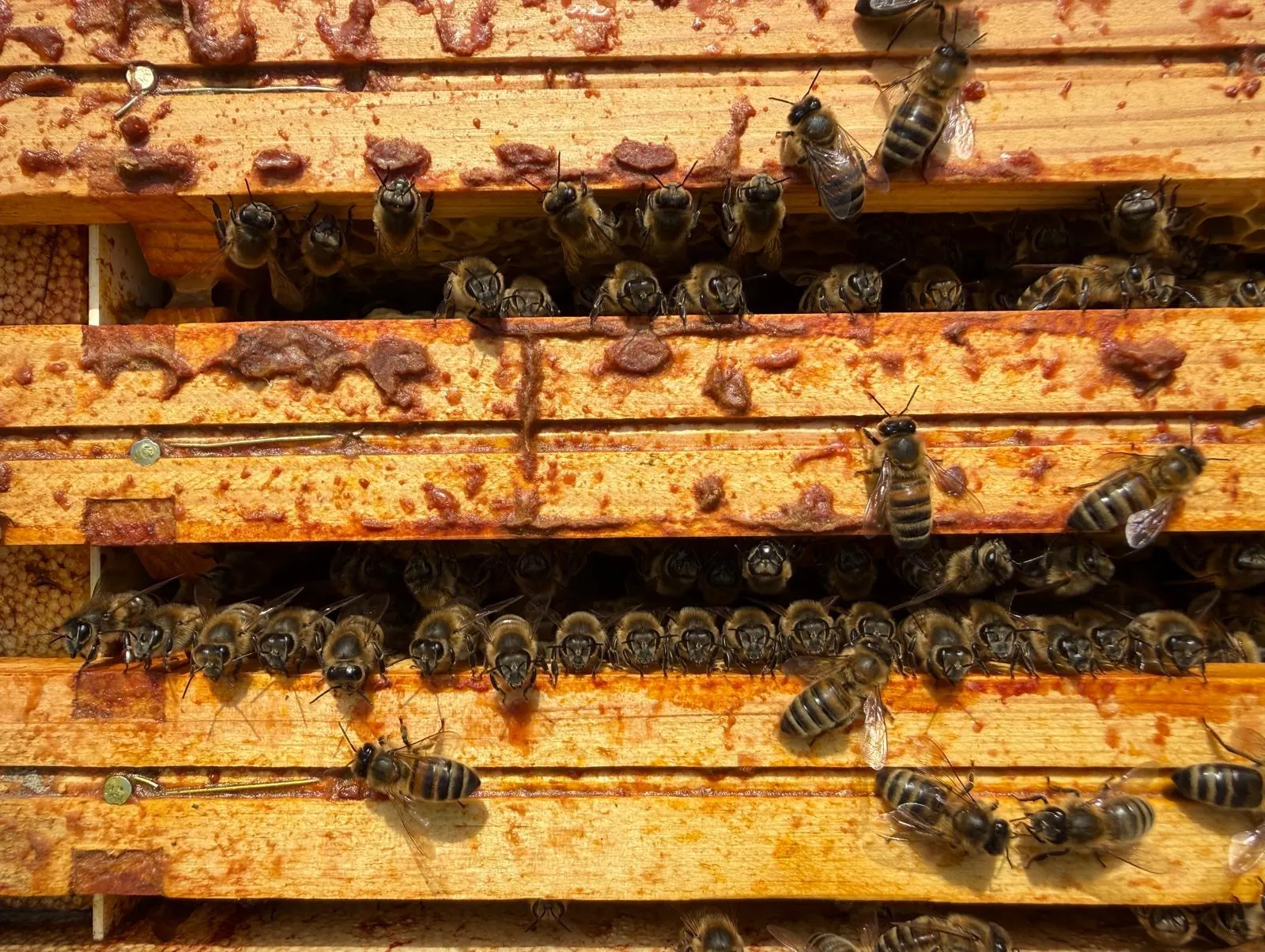
Why Bees Beard
On warm days, especially when the colony is still buzzing with activity from a productive summer, temperatures inside the hive can climb. Honeybees are remarkably good at regulating the internal climate of their colony, and one of their simplest tools is to reduce the number of bodies inside the hive itself. By stepping outside and clustering at the entrance, the bees:
- Free up space inside, easing overcrowding and allowing heat to dissipate more easily
- Reduce the number of bodies generating warmth within the brood chamber
- Improve airflow through the hive, since fewer bees inside means less obstruction for air movement
The bees gathered at the entrance in our photos aren't idle, either. Many of the workers stationed right at the entrance will be fanning, beating their wings to actively draw air through the colony and help ventilate it, much like a living extraction fan. It's one of the clearest examples of how a colony works together as a single, self-regulating organism rather than thousands of individual insects each doing their own thing.
Bearding is a recognised and well-documented response to warm conditions, and it's something beekeepers up and down the country will have seen at various points this year.
Why It's Happening Now, in Autumn
You might expect bearding to be purely a midsummer phenomenon, but late September can still bring surprisingly warm, still afternoons, and our colonies are currently at their largest population of the year following months of steady summer growth. That combination, a big, bustling workforce plus a mild spell, is exactly when we'd expect to see the bees step outside to cool things down and keep the air moving.
It's also a helpful reminder that our bees don't work to a calendar, they work to the conditions in front of them. As the weather cools properly and the days shorten, this behaviour will fade. The colony will begin its more familiar autumn routine, tightening up its numbers, slowing the queen's laying rate and preparing to cluster together for warmth rather than to escape the heat.